By Glenn Ricketts
Last week’s two-day Microsoft outage showed what happens when the world runs on one provider’s cloud. Whether the threat is AI, criminals or a faulty update, the risk is the same: you’ve handed over control. In the 1980s, businesses walked away from timeshare to take that control back. I believe critical systems are about to come home again. The industry calls it cloud repatriation.
I’ve been in this industry a long time. Long enough to remember when nobody had a computer of their own.
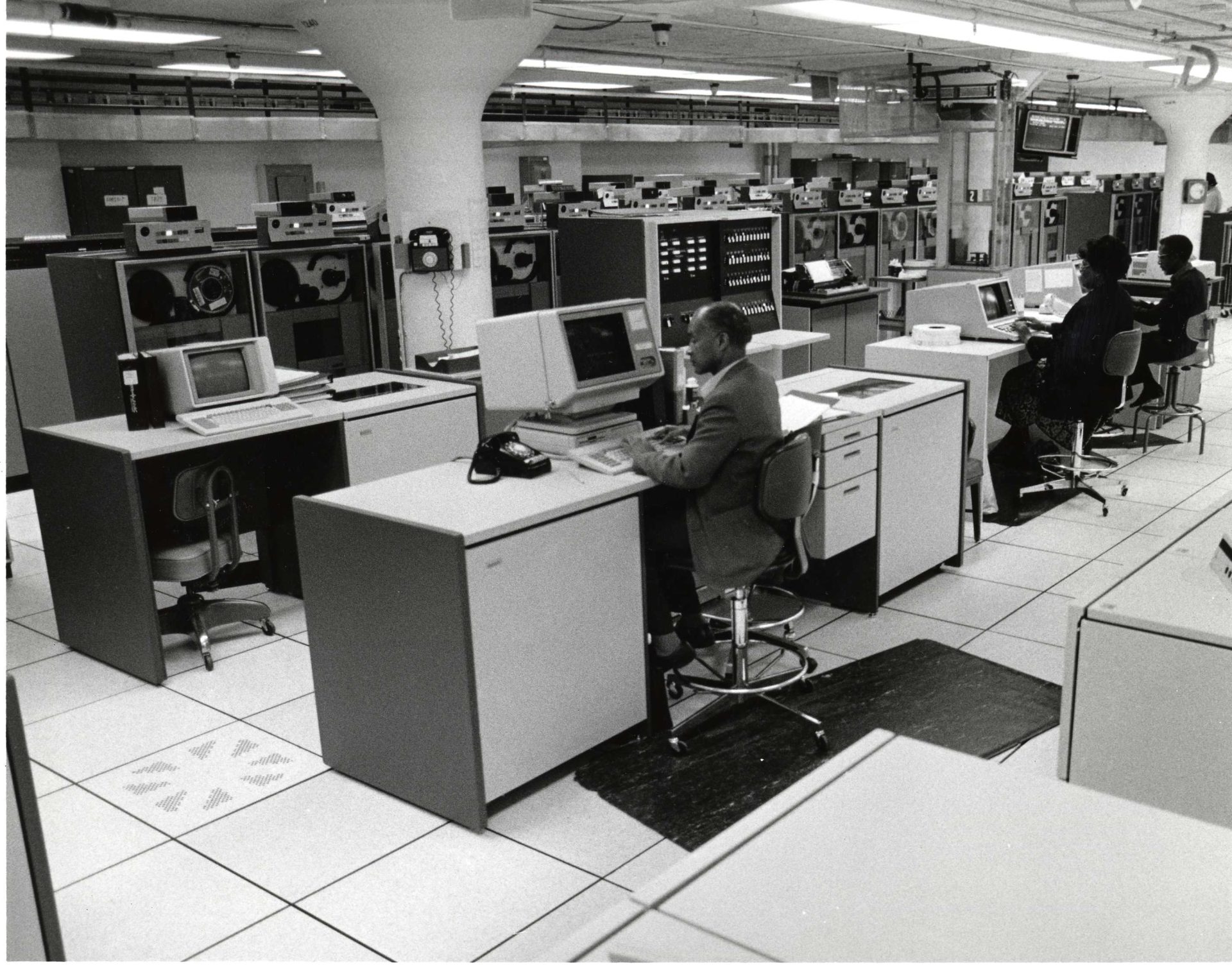
In the mid-1980s, if a business needed computing power, it rented it. Companies like Datacom ran the mainframes, and you bought time on them. That was timeshare. Your work ran on someone else’s machine, on someone else’s schedule, and you paid for every minute.
Then the minicomputer arrived. Wang, DEC, Sequent and others put serious computing power within reach of an ordinary business. The machines were installed on premises, people worked on them through terminals on their desks, and the business owned the lot. Nobody was renting anything any more.
Why did companies make that move? It wasn’t only about cost. They didn’t want to depend on someone else’s time. They wanted their systems, their data and their schedule under their own roof.
Keep that in mind, because I think we’re about to watch it happen again.
Why the cloud was never really cheaper
Fast forward nearly forty years and the industry has rediscovered renting. We called it software as a service and the cloud, but the idea was the same: your applications and your data run on someone else’s machines, and you pay for the privilege.
The pitch was that the cloud was cheaper. No servers to buy, no data center to run, no team of system administrators. One predictable cost per seat per month.
But it was never really cheaper. The cost didn’t go away. It moved from the balance sheet into the monthly bill, and the bill keeps growing. Every new user, every extra gigabyte and every price rise at renewal goes straight into it, and there’s no asset at the end of it. Ten years on, a lot of CFOs are looking at what they spend on cloud and SaaS and wondering where the savings went.
That would be manageable if cost were the only problem. It isn’t.
What the Microsoft outage showed about cloud risk
When you move your systems into someone else’s environment, you don’t only hand over your servers. You hand over control.
You don’t decide when patches are applied. You don’t decide who else shares the hardware. You can’t see what’s happening in the layers underneath your tenancy. If the provider goes down, you go down with it.
Last week we saw exactly how that plays out. On Thursday 12 November, Microsoft 365 began failing around the world. Outlook, Teams and Copilot were disrupted in more than 70 countries, and it took Microsoft two days to restore service to all of its customers.
Within hours, governments, banks and hospitals around the world were back to methods from decades ago:
- The UK’s National Health Service switched to paper records.
- Norway’s parliament and several government ministries lost email.
- Foreign banks in Taiwan fell back on fax machines.
- Euronext told companies to phone in their trades.
It wasn’t a cyberattack. Microsoft traced it to a hidden defect in an earlier fix to its own network servers. That defect triggered a cascading failure that the systems built to contain it couldn’t stop.
That’s the point. None of those organizations did anything wrong. They didn’t click a bad link or skip a patch. They were simply depending on the same provider, and when it stumbled, they all stumbled together. Amazon Web Services showed the same thing in October 2025, when a fault in a single region took thousands of businesses offline at once.
This is what I mean when I say the risk is exactly that: risk. The threat could be AI, a criminal gang, a failed update or a provider that changes its terms. Whichever it is, when your business-critical systems sit in someone else’s environment, it’s outside your control. AI only makes the attacks faster and more relentless. It didn’t create the exposure. We did that when we handed over the keys.
Will companies move back from the cloud?
I don’t have a crystal ball, but I’ve seen this cycle before. Here’s where I think it goes.
Critical systems come home. Not everything. Email, collaboration and low-risk tools may well stay in the cloud. But the systems that hold your intellectual property and your customer data will move back into environments you control, whether that’s your own premises, your own data center or a private cloud tenancy only you can reach. The industry already has a name for it: cloud repatriation. Just as the minicomputer replaced timeshare, private infrastructure will replace the shared cloud for the work that matters most.
Software is leased, but runs on your ground. The old choice was to buy software and own the headache, or rent it and own nothing. The model I expect to win sits in between: subscription software that runs in your environment, where the vendor has no access into it and the patches are yours to apply when you choose.
Organizations put an end to single-vendor dependence. Many organizations today run almost everything on a single provider’s cloud, and much of that is Microsoft. Last week showed what that costs: one faulty fix, and email, meetings and AI tools went down together across 70 countries. I expect the more careful organizations to deliberately bring back alternatives: systems that don’t depend on one company’s platform, one company’s identity system or one company’s outage. Not because Microsoft is a bad provider, but because putting everything in one basket was never a strategy. It just became a habit. Fortune made the same point after the outage, noting that public sector loyalty to Microsoft “has more to do with inertia than innovation.”
Data sovereignty stops being a compliance box. Today it’s mostly about which country your data sits in. Tomorrow it will be about who can reach your data at all.
Nothing new under the sun
While the technology changes, the questions don’t. Who owns the machine? Who decides when it runs? Who else can get at what’s on it?
In the 1980s, businesses answered those questions by bringing their computing in house. They paid more up front, and in return they got control. I think the same trade is about to look very attractive again.
At ActiveDocs, we’ve always given customers that choice. Our document automation runs in your own environment, on premises, with your choice of hosted provider, or in your private cloud, and we have no access to it. When you use AI to design templates, you choose the model, or no model at all. Your documents carry your intellectual property, and they should stay where you control them.
So here’s a question worth asking your IT team this week: if our cloud provider went dark tomorrow, which of our critical systems would still be running? If the answer makes you uncomfortable, you already know which way this is heading.
Sources
- Microsoft hit by global outages: What happened and why?, Al Jazeera
- Microsoft says affected services fully recovered following worldwide outage, Al Jazeera
- We Now Know What Really Caused Microsoft’s Massive November Outage, SlashGear
- Microsoft Struggles to Repair Worldwide Outage. Here’s What You Need to Know, TIME
- One Microsoft glitch stalled courts, government offices and police—exposing how fragile America’s systems really are, Fortune